
Blockchains
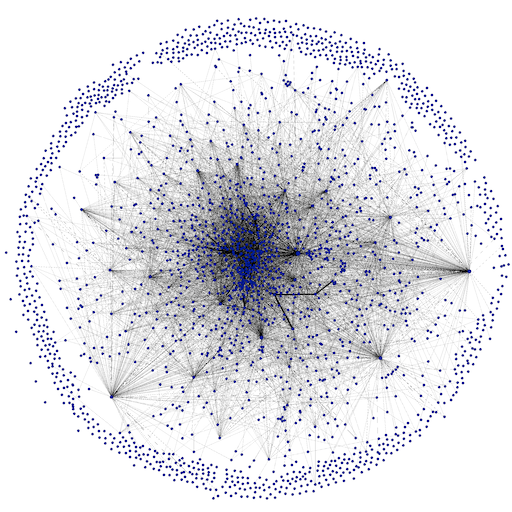
Public blockchains (also mistakenly confused with crypto currencies) are in a sense, inevitable evolution of techno-social phenomena that likely will revolutionize various key aspects of our social economic life. Like many social phenomena, they emerge out of a large number of people; unlike many social phenomena, they are prevailing exponentially fast due to the underlying technology: internet, maths (hashing, zero-knowledge proof, etc.), and the ever growing needs for consensus/truth.
One aspect I have been looking into is the self-organization patterns and mechanisms in blockchain ecosystems, in particular the evolution of transaction networks, decentralized social networks, and the optimal construction of layer 2s like the lightning network.
On a more personal interest, I am an active (somewhat) blockchain community member (as you might already tell from this website address). My efforts involves PoW and PoS participations, community governance voting, bug reporting, etc. I have been giving advisories to DeFi related activities. During the DeFi summer, I was providing consulting to one of the fast emerging DeFi protocols.
There calls for a bigger question about blockchains: would decentralization last, or we will always repeat the cycle between decentralization and centralization (合久必分,分久必合) like human civilizations have always been? I would say this is the first time in history things may be different!
Related research papers:
Behavioral structure of users in cryptocurrency market
Optimal fee structure for efficient lightning networks